Siem Reap Province is a major hub for international cultural tourism in Southeast Asia and a major force behind the growth of trade and services in the Kingdom of Cambodia. With more than 13,000 operational businesses and manufacturing facilities, the province boasts a thriving economy and a population of over a million. The Angkor Wat heritage complex and the outstanding transportation capacity of the new Siem Reap Angkor International Airport (SAI), which can handle 7 million passengers annually, are the main drivers of the province's core strengths, which are concentrated in tourism services, travel, and upscale hospitality ecosystems, which command a dominant share of over 70%. In the new era, Siem Reap is rapidly transforming into a green, smart city by actively attracting Foreign Direct Investment (FDI), pioneering the application of digital technology in tourism management, developing supporting organic agriculture across more than 200,000 hectares of arable land, and implementing circular economy models for sustainable emission reductions.
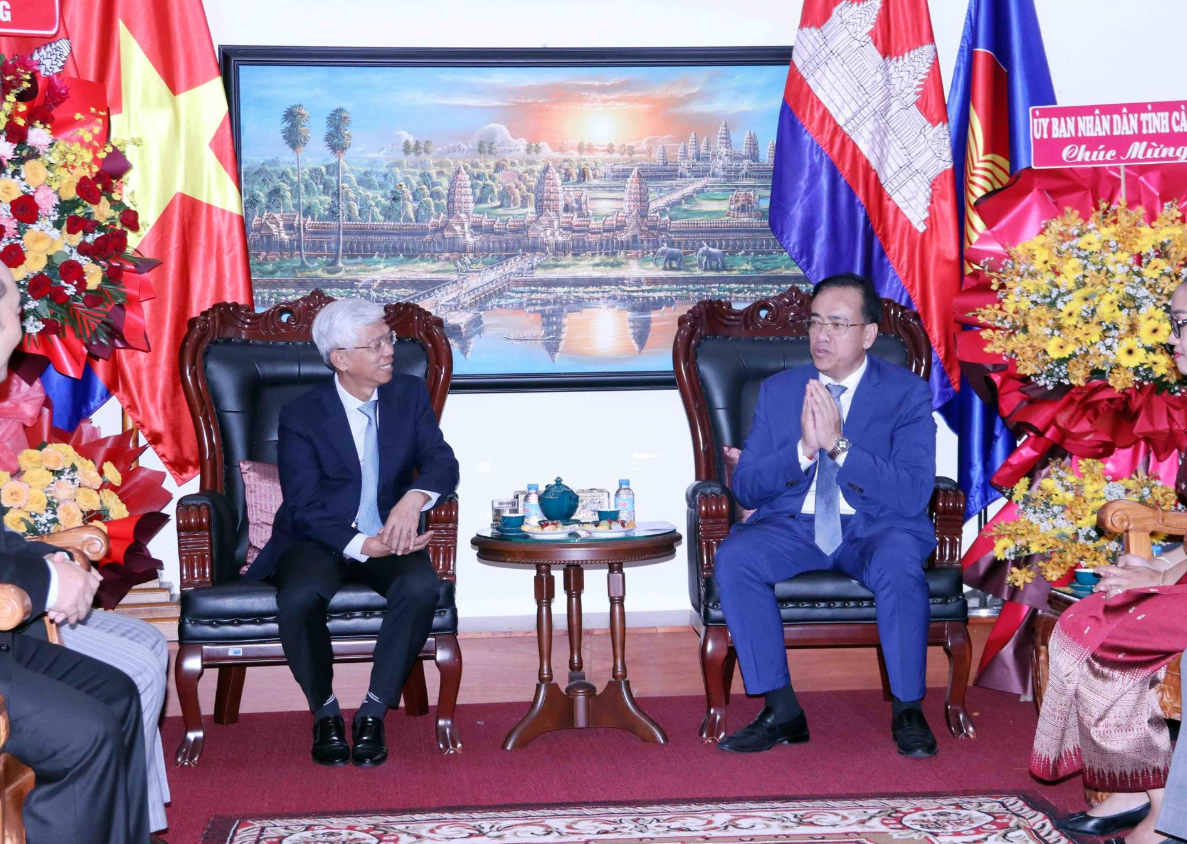
Ho Chi Minh City promotes cooperation with Cambodian localities – Photo: Tin Tuc Newspaper
In terms of trade connection, tourism promotion, green urban management, and wide cultural and intellectual interactions, the two regions' collaborative accomplishments throughout the years have proven to be quite significant. Following the ASEAN urban exchange conferences in 2024 and 2025, which cleared the path for specific cooperation initiatives on sustainable development and green economic recovery, the bilateral engagement has been further expanded. The development of a startup ecosystem for young local entrepreneurs, cooperative tour packages under the "Two Countries – One Destination" initiative, and the exchange of urban governance solutions in wastewater treatment and plastic waste management in the Tonle Sap ecological region are just a few examples of recent practical projects that have continued to reach noteworthy milestones.
In order to draw in direct investment and establish strategic partnerships with partners from Siem Reap Province in three crucial areas, the City is growing its networks of partnerships, especially in light of the ASEAN metropolises and Ho Chi Minh City collaborating on sustainable and resilient development goals:
1. High-Quality Tourism and Heritage Connectivity: Promoting joint research, integrating high-end travel supply chains, training hospitality human resources, and digitizing cross-border cultural heritage tourism experiences.
2. Smart Cities and Green Infrastructure: Transferring digital urban governance solutions, renewable energy development solutions, environmental and ecological management of the Tonle Sap region, and deploying circular economy models for sustainable emission reductions.
3. Organic Agriculture and Food Processing: Attracting investment flows from enterprises of both localities into the production and packaging chains of clean agricultural products, and high-tech agriculture to directly serve the high-end restaurant and hotel ecosystems.