In terms of its economy and main advantages, Vientiane is the Greater Mekong Subregion's important commercial gateway and the country's greatest political, economic, and cultural hub. With an average annual growth rate of 5.34% between 2021 and 2025, the Capital continuously confirms its status as the nation's primary economic engine. The city's per capita income is expected to reach USD 3,872 by 2025, significantly surpassing the goals outlined in the five-year plan, while its overall GDP is predicted to reach LAK 89.28 trillion. Vientiane's economic structure is highly integrated and undergoes a positive shift toward a service-oriented economy, in which the service sector has risen to account for 38% of the GRDP, asserting its pivotal role alongside industry (accounting for 49%) and agriculture (accounting for 13%). Notably, the tourism sector has become a brilliant highlight by welcoming 5.64 million visitor arrivals and generating a record revenue of USD 1.32 billion, doubling the initial plan thanks to the harmonious blend of modern urban transformation with long-standing Buddhist cultural identity reflected through cultural heritage landmarks such as Pha That Luang and Patuxay.
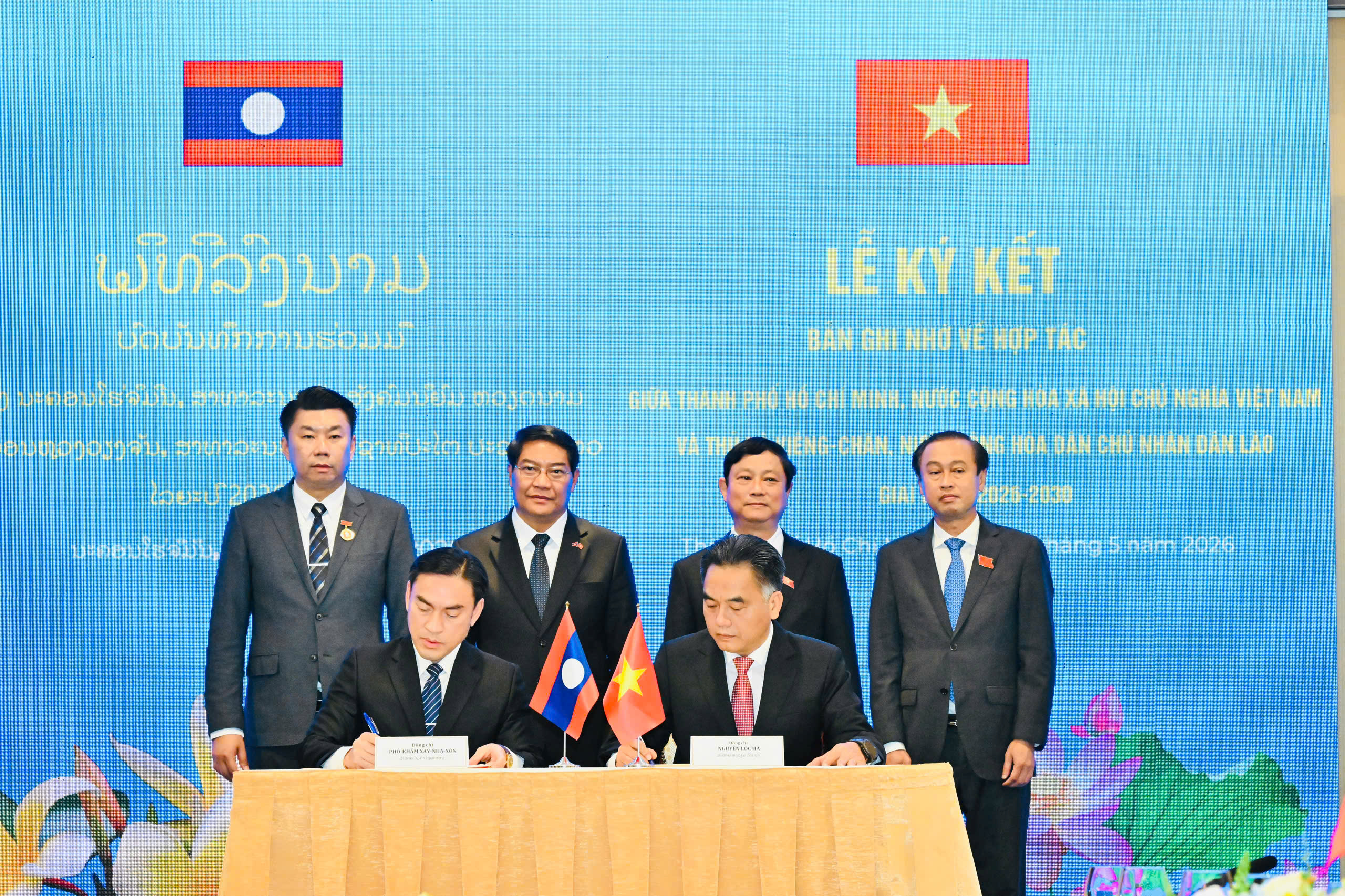
Ho Chi Minh City and Vientiane Capital sign a Memorandum of Understanding on cooperation for the 2026–2030 period. - Photo: Department of External Relations of Ho Chi Minh City
In the areas of commerce and investment, healthcare, education, and industrial infrastructure, the two communities' collaborative accomplishments have been extremely significant and influential for more than 20 years. The Investment Promotion and Management Committee (IPMC) has strategically supported the bilateral connecting corridor by implementing exclusive incentive programs for foreign direct investment (FDI) businesses operating within internationally recognized Special Economic Zones. Flagship practical projects, such as the Vientiane Industrial and Trade Area (VITA) Special Economic Zone with a capital scale of USD 43 million focusing on assembly and international goods transshipment, combined with the Longthanh - Vientiane Specific Economic Zone mega-project featuring a total investment capital of approximately USD 1 billion developed under a modern service, tourism, and logistics urban model, have injected strong momentum into supporting digital infrastructure planning and elevating the value chain for the business communities of both localities.
With an eye toward the future, Ho Chi Minh City is expanding its networks of partnerships to draw in direct investment capital and create strategic alliances with partners from Vientiane Capital in four important areas. These networks are based on sustainable traditional relations and an expanding economic development space:
Industrial Infrastructure and Urban Logistics: Promoting joint research and the transfer of modern industrial complex management solutions and optimizing infrastructure connecting international production, assembly, and goods transshipment supply chains.
Finance, Trade, and Digital Services: Collaborating on integrating business services chains, sharing experience in applying financial technology (fintech), digitalizing public services, and establishing financial institutions to support cross-border investment flows.
High-Quality Tourism and Heritage Connectivity: Expanding the scale of joint travel itineraries that integrate historical and cultural experiences, and promoting high-end spiritual and ecological tourism packages connecting major urban centers along the Mekong River corridor.
High-Tech Agriculture and Food Processing: Attracting enterprise investments into cultivation, clean agricultural product packaging, and the application of core technologies to enhance the value-added capacity of standardized food supply chains.