Situated in the Caribbean region in the southeast of the island nation, Santiago de Cuba is the seat of the province of the same name and the second-largest city in the Republic of Cuba. Established in 1515 by the explorer Diego Velázquez de Cuéllar, it was the first capital of Cuba and has a rich and heroic revolutionary past. It is known as the cradle of the great Cuban Revolution. The city maintains priceless military and cultural architectural structures, like the San Pedro de la Roca Castle, according to data from the UNESCO World Heritage System. It is also a thriving center of culture, well-known for its traditional dances and unique Carnival celebrations, resulting in a distinctive historical metropolis that successfully combines a tenacious Caribbean identity with a revolutionary attitude.
In terms of its economy, Santiago de Cuba is one of Cuba's leading industrial and marine centers. It is home to the Guillermón Moncada Port, a vital maritime commerce hub that connects the country's eastern area. The city is currently concentrating on creating industrial zones, updating its port infrastructure, and actively encouraging investment in agro-food processing and renewable energy.
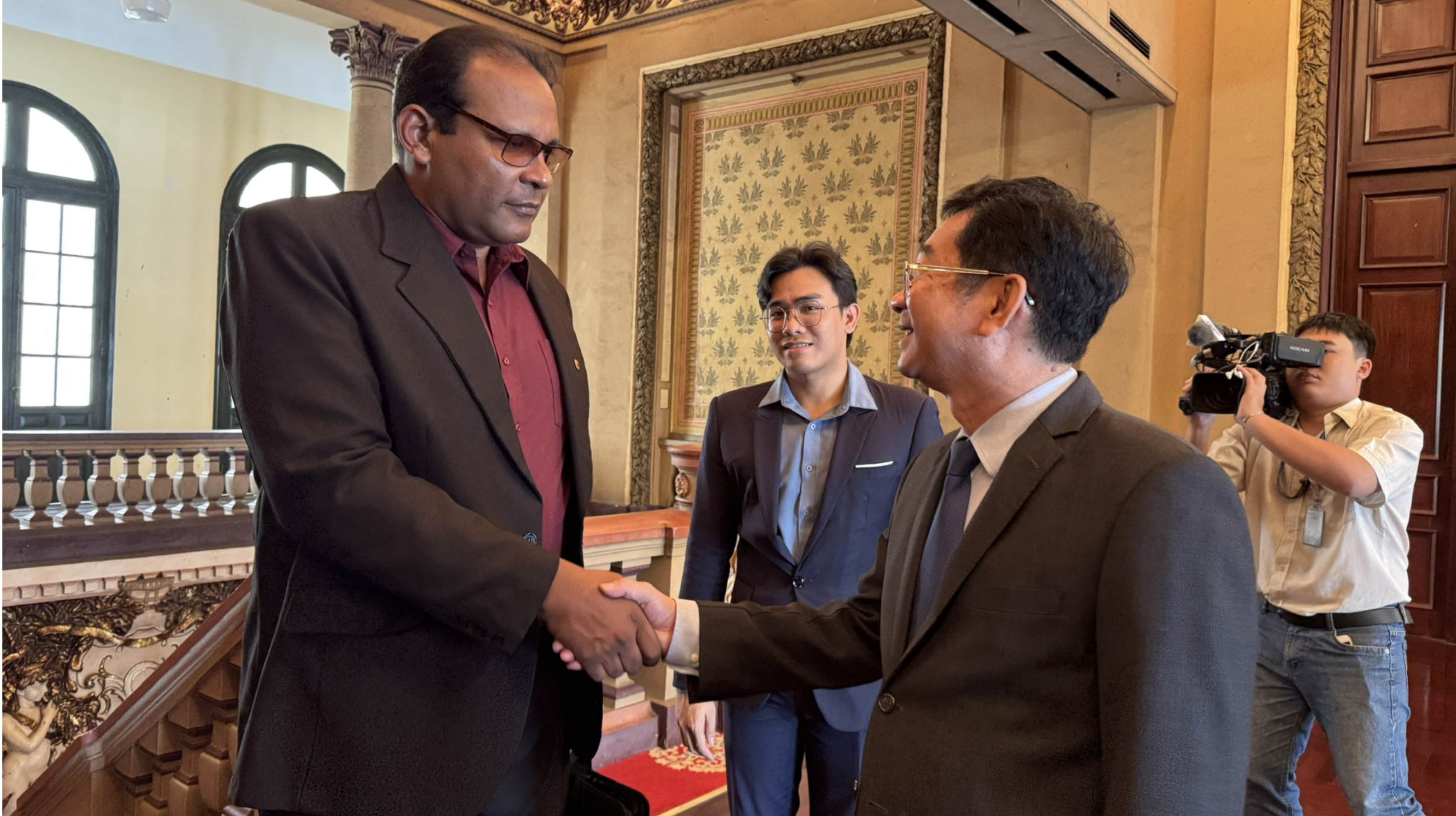
Vice Chairman of the Ho Chi Minh City People's Committee Duong Ngoc Hai receives the Vice Governor of Santiago de Cuba Province, Waldis Gonzalez Peinado. - Photo: Ho Chi Minh City Television
Because of the remarkable and devoted unity of the two peoples, the amicable cooperation accomplishments between the two localities have been deeply treasured over the years. The bilateral corridor has been constantly maintained through high-level delegation exchanges, people-to-people diplomacy, and the advancement of cultural diplomacy since the two localities set the groundwork for their partnership in 2007. Over the years, the overall commercial transaction between Ho Chi Minh City and Cuba has steadily increased, which is crucial for advancing collaborative initiatives in high-tech agriculture, biotechnology, and healthcare. Recent meaningful milestones, notably the sisterhood program between the Ho Chi Minh City Command and the Santiago de Cuba Military Region, alongside bilateral business promotion conferences, have established a solid legal framework and elevated the partnership between the two localities to a profound new chapter.
Based on the Vietnam-Cuba Intergovernmental Cooperation Framework, Ho Chi Minh City is broadening its networks of partnerships in order to draw direct investment and establish strategic alliances with partners from Santiago de Cuba City in five important areas, especially in light of the city's recently expanded sustainable development space:
1. Advanced Healthcare and Biotechnology: Partnering in the exchange of medical expert delegations, transferring Cuba's advanced pharmaceuticals and vaccines, and developing high-tech family medicine centers in Ho Chi Minh City.
2. Port Infrastructure and Maritime Logistics: Sharing operational solutions for maritime transport infrastructure systems, connecting maritime logistics routes, and promoting bilateral trade through the Guillermón Moncada Port gateway.
3. Food Security and Urban Agriculture: Cooperating in the transfer of high-tech cultivation models for rice, corn, and agricultural products, and driving food production joint ventures to serve the domestic demands of both sides.
4. Heritage Tourism and Cultural Exchange (MICE): Collaborating on the creation of inter-regional tourism routes connecting revolutionary heritage, exploiting the potential of cultural maritime tourism, and exchanging human resource training programs for the hospitality and travel industry.
5. Renewable Energy and Sustainable Green Cities: Exchanging climate change adaptation solutions for coastal cities, developing clean energy sources (solar power, biomass), and advancing digital urban infrastructure governance.