Cooperation between Ho Chi Minh City and the City of Košice was formally established through the signing of a Memorandum of Understanding on the Establishment of Friendship and Cooperation in 2016. The Memorandum created a framework for cooperation particularly in the fields of economy, tourism, science and technology, education and culture. Building on this foundation, the two cities have significant potential to further develop their cooperation in innovation, sustainable urban development, education, culture and people-to-people relations.
Košice is the second-largest city in Slovakia, with more than 220,000 inhabitants, and the main economic, cultural, educational and innovation centre of eastern Slovakia. Its economy combines a strong industrial base with a growing information technology and service sector, higher education and research, creative industries and culture. The presence of universities, research institutions, technology companies and a growing innovation ecosystem provides a strong basis for cooperation between the public, academic and private sectors.
Košice has undergone a significant transformation through culture, creativity and active civic life. As European Capital of Culture 2013, the city strengthened its cultural and creative infrastructure and gained valuable experience in using international cooperation as a driver of long-term urban development. This development continued through further European and international recognition: Košice became European City of Sport 2016, joined the UNESCO Creative Cities Network as a Creative City of Media Arts in 2017, and was designated European Volunteering Capital 2019. Together, these experiences have strengthened the city's capacity to work across culture, creativity, sport, community engagement and international networks as part of its wider urban transformation.
A significant milestone in the development of Košice’s urban innovation ecosystem was Košice 2.0, implemented under the European Union’s Urban Innovative Actions programme. The project tested new approaches to data-driven decision-making, citizen participation and public-service innovation, helping to embed evidence-based governance and real-life experimentation more firmly in the city’s approach to urban development.
This experience is now being taken further through SAM-SUD – Smart Asset Management for Sustainable Urban Development, an Innovative Actions project supported by the European Urban Initiative and led by the City of Košice. The project combines digital and AI-supported tools, stakeholder participation and new approaches to public asset management to develop and test more effective ways of managing and transforming municipal buildings and assets.
Building on this innovation-oriented approach, Košice has in recent years placed increasing emphasis on sustainable and climate-neutral urban development. The city has received the EU Mission Label within the EU Mission for 100 Climate-Neutral and Smart Cities by 2030, becoming the first Slovak city to receive this recognition, and has adopted its Climate City Contract 2030. The city was also selected by the European Commission as one of the five finalists for the European Green Capital 2028 Award.
Together, these experiences illustrate how Košice uses international cooperation and city networks as practical tools for urban development. They provide a strong basis for knowledge exchange with Ho Chi Minh City in areas such as data-driven urban governance, citizen-centred public services, stakeholder cooperation and sustainable urban transformation, as well as for identifying concrete opportunities for future cooperation between the two cities.
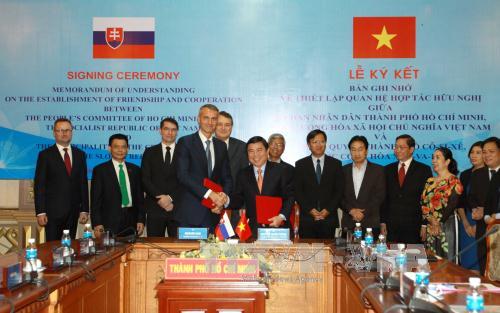
Representatives of Ho Chi Minh City and Košice signing the Memorandum of Understanding on the Establishment of Friendship and Cooperation between the two cities in 2016.
Photo: Vietnam News Agency (VNA).
Opportunities for Future Cooperation
Building on the long-standing relationship between the two cities and within the framework of the 3rd Ho Chi Minh City Friendship Dialogue 2026, Košice sees strong potential for further cooperation with Ho Chi Minh City in several complementary areas:
1. Creative Cities and Citizen Experience: Promote the exchange of experience drawn from the Košice 2.0 initiative and other urban innovation activities, with a focus on enhancing citizen experience, improving the design and delivery of public services, encouraging citizen participation, and fostering creative industries as a driver of sustainable urban development.
2. Digital Transformation and Start-up Ecosystems: Strengthen cooperation among technology enterprises, start-ups, innovation stakeholders and local institutions through the exchange of experience in urban data, digital solutions, innovation ecosystems and new approaches to delivering public services.
3. Education and Digital Talent Development: Expand partnerships among universities and educational institutions, promote digital skills development, student and academic exchanges, talent attraction and retention, and stronger cooperation between academia, the city and the private sector.
4. Culture, Heritage and Youth Creativity: Enhance cooperation through cultural and artistic exchanges, youth creativity programmes, urban heritage promotion and cultural initiatives that strengthen people-to-people ties between the two cities, building also on Košice's experience as European Capital of Culture 2013.
5. Smart Urban Governance: Share experience in data-driven and evidence-based urban governance, measuring quality of life and citizen satisfaction, promoting community participation, advancing open data initiatives, and using digital tools to support better-informed urban decision-making.
Looking Ahead
A decade after establishing formal cooperation, the Friendship Dialogue 2026 provides an opportunity for Košice and Ho Chi Minh City to give their relationship new momentum. The two cities differ considerably in size and geographical context, but they share many of the same challenges: attracting and retaining talent, supporting innovation, improving public services, responding to climate change and creating attractive and inclusive cities for their residents.
Košice is interested in developing cooperation that goes beyond formal exchanges and creates opportunities for institutions, universities, businesses, communities and young people from both cities to work together. The existing partnership, complemented by strong people-to-people ties, provides a solid foundation for identifying concrete areas of cooperation in the years ahead.
09:16:34 query returned open=false
09:25:23 dblclick "Košice is the second-largest city in Slovakia, with more than 220,000 inhabitants, and the main economic, cultural, educational and innovation centre of eastern Slovakia. Its economy combines a strong industrial base with a growing information technology and service sector, higher education and research, creative industries and culture. The presence of universities, research institutions, technology companies and a growing innovation ecosystem provides a strong basis for cooperation between the public, academic and private sectors.

Košice has undergone a significant transformation through culture, creativity and active civic life. As European Capital of Culture 2013, the city strengthened its cultural and creative infrastructure and gained valuable experience in using international cooperation as a driver of long-term urban development. This development continued through further European and international recognition: Košice became European City of Sport 2016, joined the UNESCO Creative Cities Network as a Creative City of Media Arts in 2017, and was designated European Volunteering Capital 2019. Together, these experiences have strengthened the city's capacity to work across culture, creativity, sport, community engagement and international networks as part of its wider urban transformation.

A significant milestone in the development of Košice's urban innovation ecosystem was Košice 2.0, implemented under the European Union's Urban Innovative Actions programme. The project tested new approaches to data-driven decision-making, citizen participation and public-service innovation, helping to embed evidence-based governance and real-life experimentation more firmly in the city's approach to urban development.

This experience is now being taken further through SAM-SUD – Smart Asset Management for Sustainable Urban Development, an Innovative Actions project supported by the European Urban Initiative and led by the City of Košice. The project combines digital and AI-supported tools, stakeholder participation and new approaches to public asset management to develop and test more effective ways of managing and transforming municipal buildings and assets.

Building on this innovation-oriented approach, Košice has in recent years placed increasing emphasis on sustainable and climate-neutral urban development. The city has received the EU Mission Label within the EU Mission for 100 Climate-Neutral and Smart Cities by 2030, becoming the first Slovak city to receive this recognition, and has adopted its Climate City Contract 2030. The city was also selected by the European Commission as one of the five finalists for the European Green Capital 2028 Award.

Together, these experiences illustrate how Košice uses international cooperation and city networks as practical tools for urban development. They provide a strong basis for knowledge exchange with Ho Chi Minh City in areas such as data-driven urban governance, citizen-centred public services, stakeholder cooperation and sustainable urban transformation, as well as for identifying concrete opportunities for future cooperation between the twocities." sidepanelOpen=false autoUpdate=true isAdv=true
09:27:26 dblclick "
Opportunities for Future Cooperation
Building on the long-standing relationship between the two cities and within the framework of the 3rd Ho Chi Minh City Friendship Dialogue 2026, Košice sees strong potential for further cooperation with Ho Chi Minh City in several complementary areas:
1. Creative Cities and Citizen Experience: Promote the exchange of experience drawn from the Košice 2.0 initiative and other urban innovation activities, with a focus on enhancing citizen experience, improving the design and delivery of public services, encouraging citizen participation, and fostering creative industries as a driver of sustainable urban development.
2. Digital Transformation and Start-up Ecosystems: Strengthen cooperation among technology enterprises, start-ups, innovation stakeholders and local institutions through the exchange of experience in urban data, digital solutions, innovation ecosystems and new approaches to delivering public services.
3. Education and Digital Talent Development: Expand partnerships among universities and educational institutions, promote digital skills development, student and academic exchanges, talent attraction and retention, and stronger cooperation between academia, the city and the private sector.
4. Culture, Heritage and Youth Creativity: Enhance cooperation through cultural and artistic exchanges, youth creativity programmes, urban heritage promotion and cultural initiatives that strengthen people-to-people ties between the two cities, building also on Košice's experience as European Capital of Culture 2013.
5. Smart Urban Governance: Share experience in data-driven and evidence-based urban governance, measuring quality of life and citizen satisfaction, promoting community participation, advancing open data initiatives, and using digital tools to support better-informed urban decision-making.

Looking Ahead
A decade after establishing formal cooperation, the Friendship Dialogue 2026 provides an opportunity for Košice and Ho Chi Minh City to give their relationship new momentum. The two cities differ considerably in size and geographical context, but they share many of the same challenges: attracting and retaining talent, supporting innovation, improving public services, responding to climate change and creating attractive and inclusive cities for their residents.
Košice is interested in developing cooperation that goes beyond formal exchanges and creates opportunities for institutions, universities, businesses, communities and young people from both cities to work together. The existing partnership, complemented by strong people-to-people ties, provides a solid foundation for identifying concrete areas of cooperation in the years ahead.

" sidepanelOpen=false autoUpdate=true isAdv=true
09:27:50 dblclick "Cooperation between Ho Chi Minh City and the City of Košice was formally established through the signing of a Memorandum of Understanding on the Establishment of Friendship and Cooperation in 2016. The Memorandum created a framework for cooperation particularly in the fields of economy, tourism, science and technology, education and culture. Building on this foundation, the two cities have significant potential to further develop their cooperation in innovation, sustainable urban development, education, culture and people-to-people relations.

Košice is the second-largest city in Slovakia, with more than 220,000 inhabitants, and the main economic, cultural, educational and innovation centre of eastern Slovakia. Its economy combines a strong industrial base with a growing information technology and service sector, higher education and research, creative industries and culture. The presence of universities, research institutions, technology companies and a growing innovation ecosystem provides a strong basis for cooperation between the public, academic and private sectors.

Košice has undergone a significant transformation through culture, creativity and active civic life. As European Capital of Culture 2013, the city strengthened its cultural and creative infrastructure and gained valuable experience in using international cooperation as a driver of long-term urban development. This development continued through further European and international recognition: Košice became European City of Sport 2016, joined the UNESCO Creative Cities Network as a Creative City of Media Arts in 2017, and was designated European Volunteering Capital 2019. Together, these experiences have strengthened the city's capacity to work across culture, creativity, sport, community engagement and international networks as part of its wider urban transformation.

A significant milestone in the development of Košice's urban innovation ecosystem was Košice 2.0, implemented under the European Union's Urban Innovative Actions programme. The project tested new approaches to data-driven decision-making, citizen participation and public-service innovation, helping to embed evidence-based governance and real-life experimentation more firmly in the city's approach to urban development.

This experience is now being taken further through SAM-SUD – Smart Asset Management for Sustainable Urban Development, an Innovative Actions project supported by the European Urban Initiative and led by the City of Košice. The project combines digital and AI-supported tools, stakeholder participation and new approaches to public asset management to develop and test more effective ways of managing and transforming municipal buildings and assets.

Building on this innovation-oriented approach, Košice has in recent years placed increasing emphasis on sustainable and climate-neutral urban development. The city has received the EU Mission Label within the EU Mission for 100 Climate-Neutral and Smart Cities by 2030, becoming the first Slovak city to receive this recognition, and has adopted its Climate City Contract 2030. The city was also selected by the European Commission as one of the five finalists for the European Green Capital 2028 Award.

Together, these experiences illustrate how Košice uses international cooperation and city networks as practical tools for urban development. They provide a strong basis for knowledge exchange with Ho Chi Minh City in areas such as data-driven urban governance, citizen-centred public services, stakeholder cooperation and sustainable urban transformation, as well as for identifying concrete opportunities for future cooperation between the two cities." sidepanelOpen=false autoUpdate=true isAdv=true