To implement Resolution No. 68-NQ/TW, the Government promulgated Resolution No. 138/NQ-CP dated May 16, 2025, on the Action Program to implement the Resolution, assigning specific tasks to ministries, sectors, and localities to fully institutionalize the set viewpoints, goals, tasks, and solutions, while requiring the formulation of action plans tailored to practical conditions to create a strong transformation in the development of the private economic sector.
On that basis, many localities have actively developed implementation plans, in which Ho Chi Minh City stands out as one of the localities in concretizing the Central Government's orientations through programs and solutions to promote enterprise development and improve the investment and business environment.
Ho Chi Minh City Realizes the Spirit of Resolution 68 Through Key Projects
Implementing Resolution No. 68-NQ/TW of the Politburo, Resolution No. 138/NQ-CP of the Government, and Action Program No. 02-CTrHĐ/TU of the Ho Chi Minh City Party Committee, the People's Committee of Ho Chi Minh City issued Decision No. 2205/QĐ-UBND dated October 20, 2025, on the Implementation Plan for Resolution No. 68-NQ/TW within the city.
The Plan identifies core goals, tasks, and solutions to concretize the Central Government's guidelines on private economic development, while assigning responsibilities to departments, boards, sectors, and localities for implementation, ensuring synchronous, effective deployment tailored to the practical conditions of Ho Chi Minh City.
To concretize the orientations of Resolution No. 68-NQ/TW on private economic development, on July 1, 2026, Ho Chi Minh City simultaneously commenced key works and projects with a total investment capital of over VND 253 trillion, mobilized from public investment, public-private partnerships (PPP), and corporate capital. The projects span multiple fields including transportation, seaports, logistics, and cultural spaces, contributing to generating new growth engines for the City and the Southern Key Economic Region.
- Ben Nha Rong - Khanh Hoi Cultural Park and Ben Bach Dang Public Greenery
This is a key project commenced by Ho Chi Minh City on the occasion of the 50th Anniversary of the City being honored to bear the name of President Ho Chi Minh. The project spans an area of approximately 73.3 hectares with a total investment value of VND 29,317 billion, developed under the public-private partnership (PPP) model. The project consists of components including the Ben Nha Rong - Khanh Hoi Cultural Park, Ben Bach Dang Public Greenery, and the refurbishment and upgrading of Nguyen Tat Thanh Street, contributing to refurbishing the Saigon riverfront space and promoting the historical and cultural values of the Ben Nha Rong area.
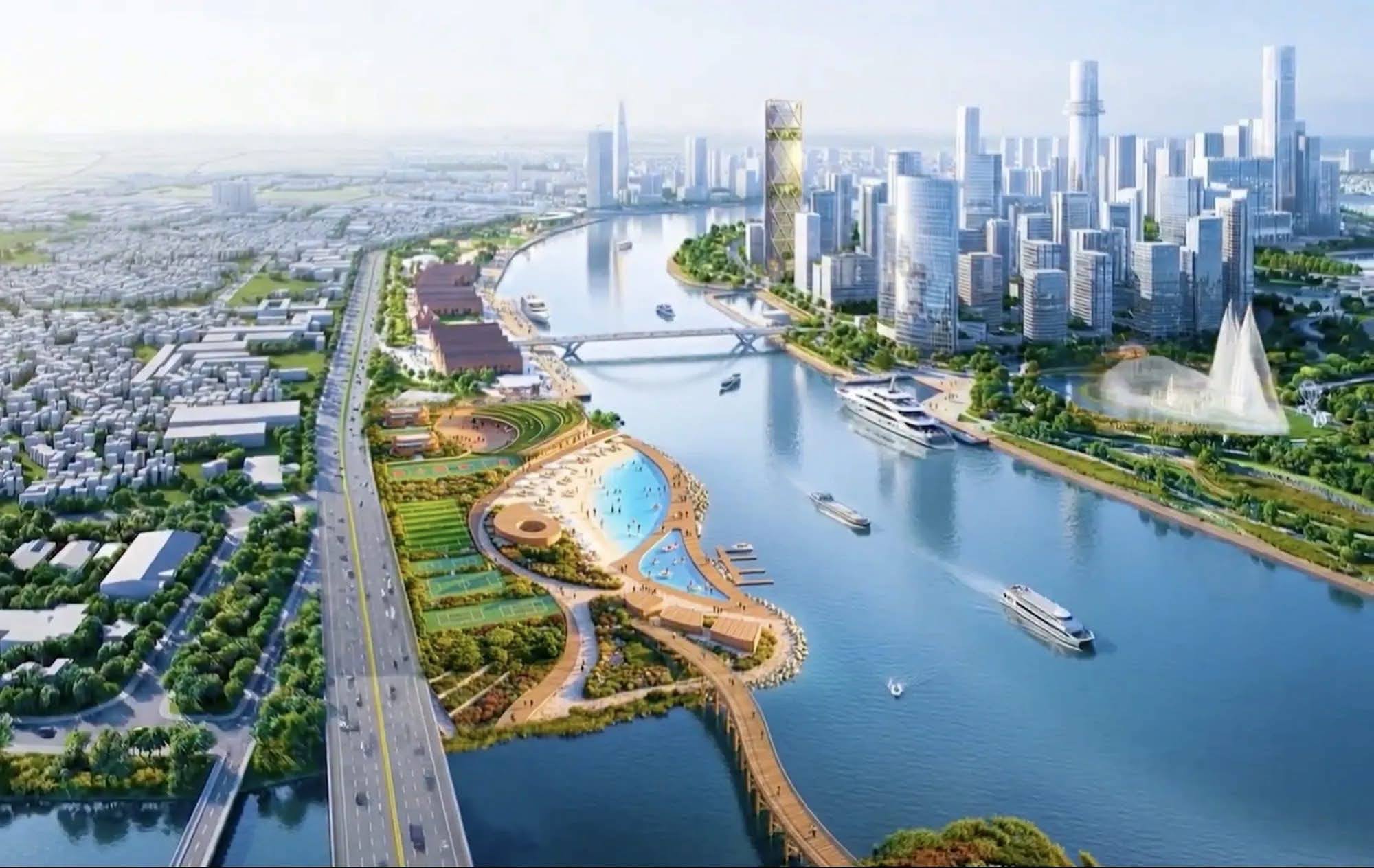
Perspective of the Ben Nha Rong - Khanh Hoi Cultural Park and Ben Bach Dang Public Greenery Project
- Ho Tram Urban Expressway - Long Thành International Airport
The Ho Tram Urban Expressway - Long Thanh International Airport is one of the eight key projects simultaneously commenced by Ho Chi Minh City. The project spans approximately 42 kilometers, featuring a scale of 6 lanes alongside parallel roads on both sides, with a total investment capital of nearly VND 47 trillion, deployed under the PPP model during the 2026-2029 period. The expressway is expected to directly connect Long Thanh Airport with the Ho Tram tourism center, opening up new development opportunities for the eastern area of the city.
- Can Gio - Vung Tau Sea-Crossing Bridge
The Can Gio - Vung Tau Sea-Crossing Bridge is one of the large-scale infrastructure projects commenced by Ho Chi Minh City in this phase. According to the Government Electronic Newspaper, the project has a total investment value of approximately VND 93 trillion, executed under the public-private partnership (PPP) model. This is one of the eight key works and projects simultaneously commenced to concretize the City's strategic infrastructure development orientations in the new era.
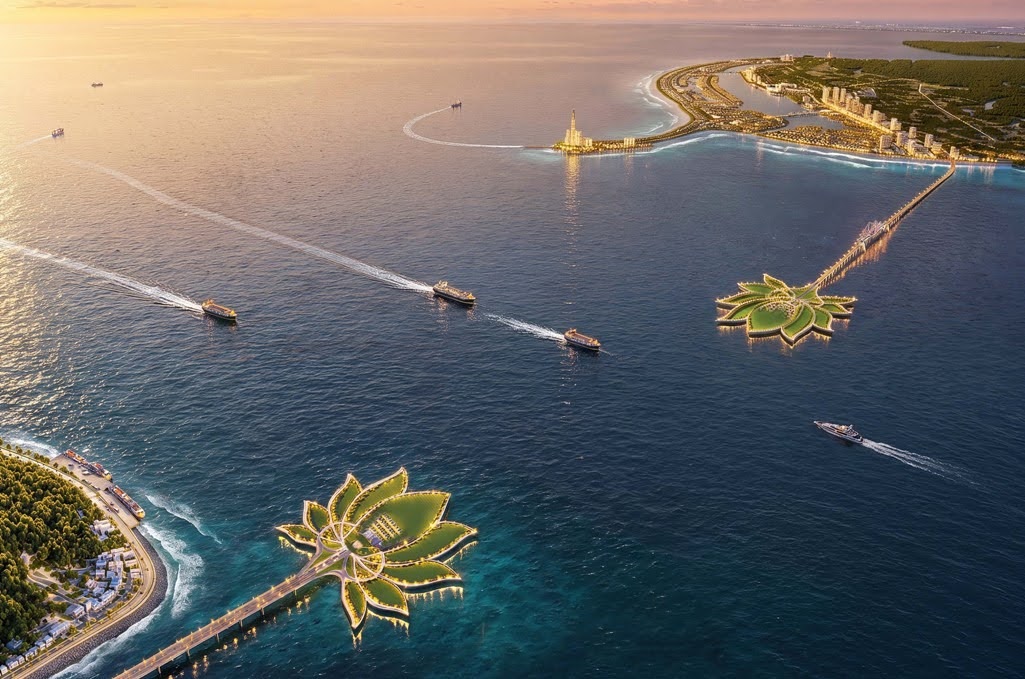
Perspective of the Can Gio - Vung Tau Sea-Crossing Project
- Cai Mep Ha General and Container Port (Phase 1)
In the field of seaports and logistics, the City is deploying Phase 1 of the Cai Mep Ha General and Container Port with a total investment value of over VND 50.8 trillion. The project spans an area of more than 351 hectares, of which the container port area accounts for approximately 229 hectares, including around 121 hectares of sea reclamation. The berth system extends approximately 7.5 kilometers, capable of accommodating container vessels up to 250,000 DWT, with a design capacity of 10.8 million TEUs per year. According to the plan, Phase 1 is expected to be put into operation by the end of 2028, with the entire project slated for completion by 2045.
- Binh Tien Bridge and Road
The Binh Tien Bridge and Road is one of the key transportation projects to perfect the City's urban transport infrastructure system. The project is implemented on the section from Pham Van Chi Street to Nguyen Van Linh Boulevard, with a total investment capital of approximately VND 6 trillion, a length of around 3.2 kilometers, and a scale of 4 to 6 lanes crossing the Tau Hu and Doi canals.
Alongside these large-scale projects, several regional connectivity transport projects were also simultaneously commenced, including the Ho Chi Minh City - Moc Bai Expressway (Phase 1), the intersection connecting the Ben Luc - Long Thanh Expressway with Rung Sac Street, and the intersection connecting the Ben Luc - Long Thanh Expressway with National Highway 50. Deployed in the same ground-breaking wave on July 1, 2026, these projects contribute to reinforcing the City's key transport infrastructure network. Concurrently with the key infrastructure projects, 4 social housing projects were commenced in June 2026, demonstrating Ho Chi Minh City's determination to develop synchronous infrastructure coupled with elevating social welfare quality, aiming toward rapid and sustainable development goals.
The deployment of key projects not only contributes to perfecting the infrastructure system and expanding the development space of Ho Chi Minh City but also demonstrates concrete efforts to realize the tasks and solutions of Resolution No. 68-NQ/TW on private economic development. By mobilising private capital, expanding public-private partnerships (PPP) and accelerating strategic investments, the City is creating a more competitive investment environment and unlocking new drivers of long-term economic growth.