The origin of Sanjo’s metal industry dates back approximately 400 years. During that period, farmers often suffered from floods of the Ikarashi River. The governor officer at the time invited blacksmiths from Edo, present-day Tokyo, to teach farmers how to make Japanese hand-forged nails as a side business. Since the mid-19th century, the production of knives and craftsmen's tools, rooted in these forging traditions, has continued to thrive. Today, these products are manufactured not only for the Japanese market but also for foreign countries.
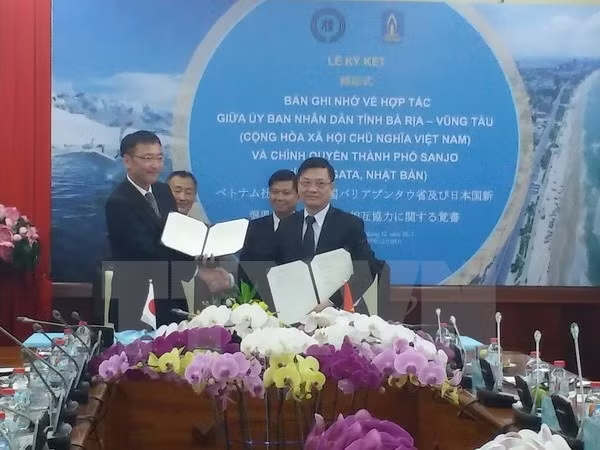
Overview of the signing ceremony. - Photo: Vietnam Plus
Sanjo City combines its long-standing craftsmanship and metal processing traditions with a natural environment characterized by the beauty of each season. The city’s cultural and seasonal features include blacksmithing, the Sanjo Festival, Japanese iris, the Sanjo Summer Festival and its fireworks, autumn leaves at Yagigahana, rice terraces of Kita-Imogawa, snow with Yagigahana, swans on the Ikarashi River at Swan Village Park, and the Honjoji Oni Odori (Demon Dance).
Regarding international cooperation, the information provided by Sanjo City does not specify cooperation with Ho Chi Minh City or other international partners. The file also does not provide information on priority sectors, investment incentives and policies, or flagship investment projects.